How to Get Paid on Time: Deposits, Invoices and Late Fees
How performers and speakers get paid on time: deposits, clear invoices, payment terms, polite reminders and late fees that clients actually respect.
 The GigTools Team
· 4 min read

The show went great. The client loved it. And six weeks later you're still waiting for the check.
Late payment is one of the most common complaints among comedians, speakers, musicians and variety acts, and most of it is avoidable. Clients rarely refuse to pay. They forget, they lose the invoice, they're waiting on someone in accounting, or nobody told them when the money was due. The fix is a simple system you use for every booking, from the corporate keynote to the Thursday club spot.
Get paid before you get paid: the deposit
A booking deposit does two jobs. It confirms that the client is serious, and it pays you for holding a date you could have sold to someone else.
- How much: 25 to 50 percent of the fee is common. Larger or far-off events often justify 50 percent.
- When: due when the agreement is signed, or within a set number of days after. Don't treat the date as confirmed until it arrives.
- Refunds: make the deposit non-refundable and say so plainly. If the client cancels, it compensates you for the work you turned down.
If you haven't settled on your fee yet, start with how to set your performance fee, then build the deposit on top of it.
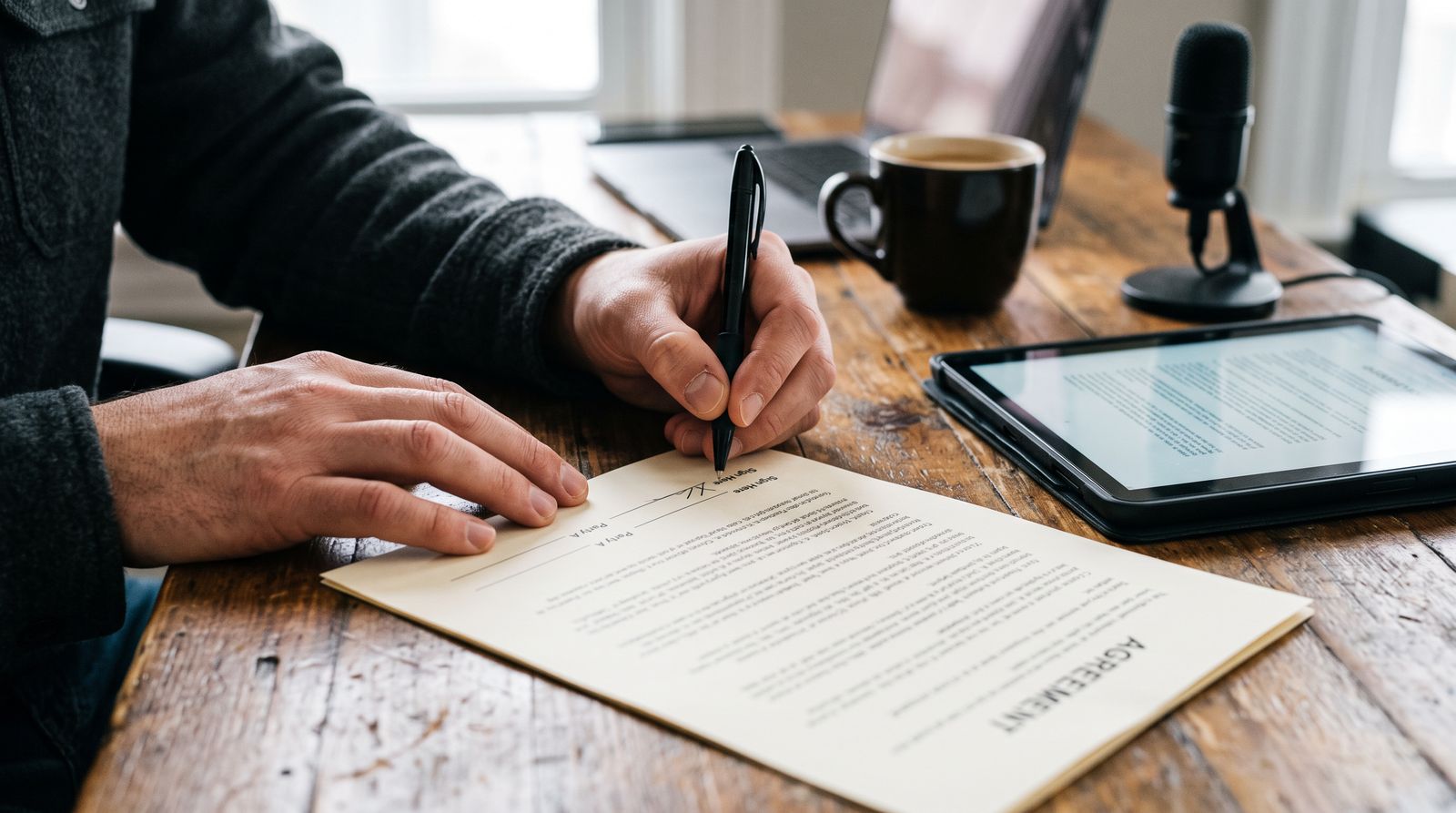
Put the payment terms in writing
Most payment arguments come from terms nobody wrote down. Your agreement should say exactly:
- the total fee and what it covers
- the deposit amount and its due date
- the balance amount and its due date (on the night, or a set number of days after the event)
- how the client can pay: card, bank transfer, check
- who pays for travel and expenses, and when they're reimbursed
- what happens if a payment is late
Our guide to what every performance agreement should include covers the rest of the agreement. The point here is that "we'll sort out payment later" is how invoices end up sixty days overdue.
Send an invoice the client can actually pay
A good invoice for a gig answers every question before the client's accounting team asks it. Include:
- Your business name and contact details, plus any tax ID the client needs to pay a contractor.
- An invoice number and date. Accounting departments file by number.
- The client's name and their purchase order number, if they gave you one. Corporate clients often can't pay without it.
- The event: date, venue and a one-line description ("45-minute keynote, Annual Sales Conference").
- The amounts: fee, deposit already received, travel or expenses, and the balance due.
- The due date, written as a date, not "net 30."
- How to pay, ideally with a link to pay online by card.
Send the deposit invoice with the agreement, and send the balance invoice before the event, not after. A client who has your invoice in hand on show day can often pay on the night.
Tip: Online payment is the single biggest speed-up. Clients who can pay by card from a link pay faster than clients who have to set you up as a vendor and cut a check.
Remind early, remind politely
Most late payments are forgotten payments. A steady reminder routine fixes them without awkwardness:
- A few days before the due date: a friendly heads-up with the invoice attached and the payment link.
- On the due date: "Just a reminder that the balance for [event] is due today."
- A week late: a direct note asking when you can expect payment, and whether they need anything from you, such as a W-9 or a new invoice.
- Two to three weeks late: a firmer message referring to the payment terms in your agreement.
Keep every reminder short and friendly. The person reading it is usually not the person who decided to pay late. If you already send a thank-you note after the show, which helps with getting rebooked, you can mention the balance due date there as well.
Late fees: use them as a nudge
A late payment fee gives the client a reason to move your invoice to the top of the pile. Common approaches are a flat fee once the payment is a set number of days late, or a small monthly percentage on the overdue balance.
Two rules make a late fee work. It has to be in the signed agreement before the event, because a fee you add afterwards will only start an argument. And it has to be legal where you work: limits on late fees and interest vary by state and country, so check your local rules before you set one.
In practice, the fee does its job by existing. Many performers waive it for a client who pays as soon as they're reminded and keep it for clients who are repeatedly late.
When a client won't pay
If reminders don't work, escalate step by step: a phone call, then a formal written demand that refers to the agreement, then small claims court or a collection service for larger amounts. A signed agreement and a clear invoice trail make each of these steps much easier, which is one more reason to put everything in writing up front.
And take note. A client who pays late once will probably do it again. Next time, ask for a larger deposit or full payment before the event.
Track every dollar you're owed
The hardest part of getting paid is often just knowing who owes you what. With twenty gigs on the calendar, it's easy to forget that a balance from last month never arrived.
That's what GigTools is built for. Each gig keeps its fee, deposit and balance due dates, and you can send invoices your clients can pay online through your own Stripe account. GigTools creates tasks to collect the balance and flags anything overdue, so nothing slips through the cracks. See how it fits your work as a comedian, speaker or musician.
Clear terms, a deposit up front, an invoice before the show and a reminder routine: that's how working performers get paid on time.
More for working performers
 Money
How to Set Your Performance Fee (and Know When to Raise It)
A practical way to price your act, quote with confidence and move your rate up without losing the clients you already have.
 Marketing
How to Build an EPK (Electronic Press Kit) That Gets You Booked
What to put in an electronic press kit for comedians, speakers, magicians and musicians, so bookers can say yes without chasing you for details.
 Contracts
What Every Performance Agreement Should Include
The clauses that protect your fee, your time and your sanity, explained in plain English for performers and speakers.