The Advance Call: 12 Things to Confirm Before Every Gig
A ten-minute call a week or two out prevents most show-day disasters. Here's exactly what to cover, and a script to make it easy.
 The GigTools Team
· 3 min read
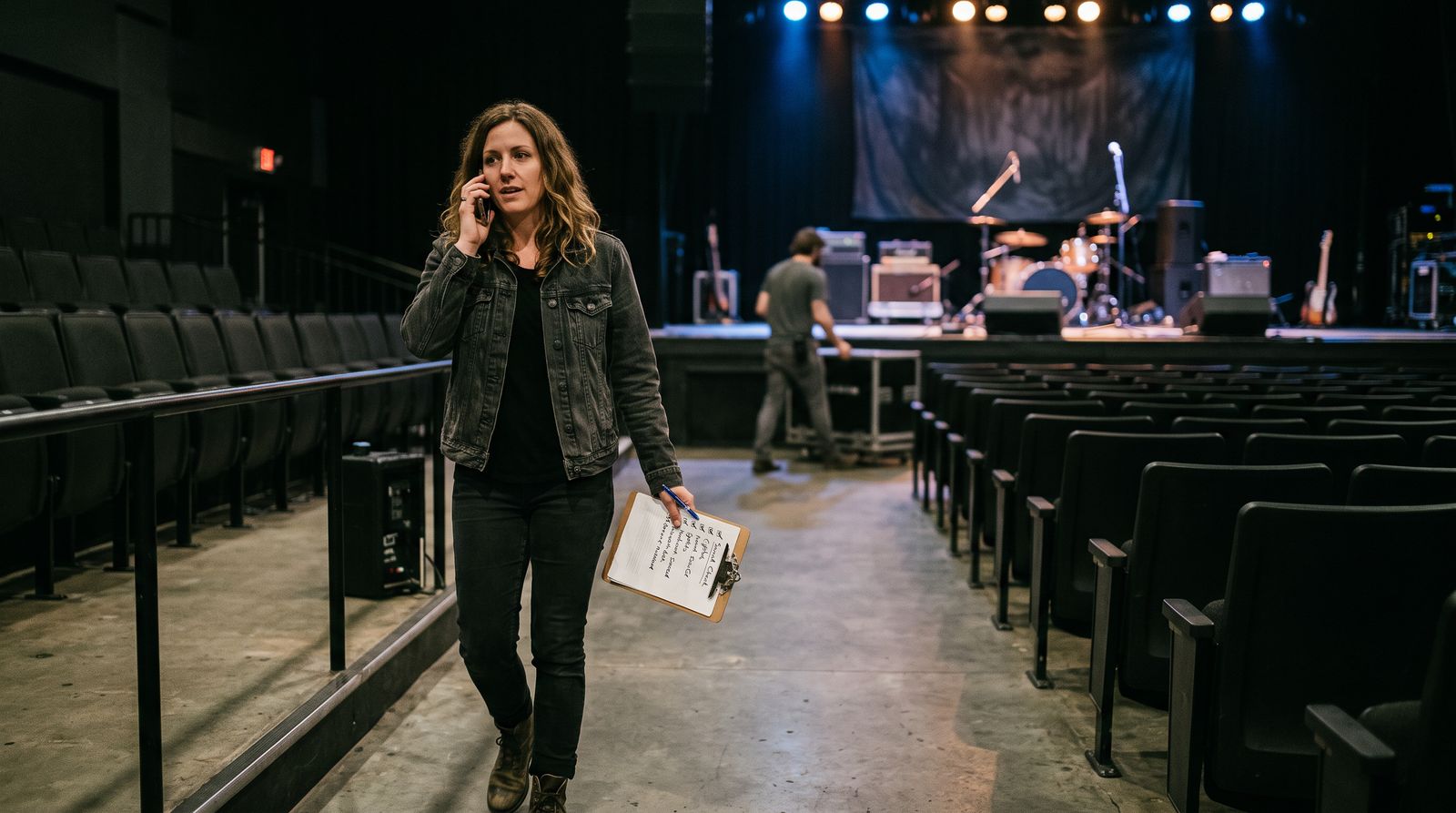
The advance is the conversation you have with your client or event contact a week or two before the show to confirm the details. Touring musicians and theater crews treat it as non-negotiable. Plenty of solo performers and speakers skip it, and then find out at 6:45 p.m. that the "stage" is a corner of the dining room and the microphone is attached to the DJ's laptop.
Ten minutes on the phone (or a well-written email) prevents most of those surprises. Here's what to cover.
When to advance
For most gigs, seven to fourteen days out is the sweet spot. Close enough that the event details are settled, far enough out that you can still fix problems. For big corporate events, fly dates or anything with production, start earlier and do a quick re-check two or three days before.
The 12 things to confirm
Logistics
- Your day-of contact. Name and mobile number of the person who will actually be on site. Often it's not the person who booked you.
- Address and entrance. The exact venue address, which door to use, where to load in, and where to park. Large hotels and conference centers can be a maze.
- Arrival and call times. When should you arrive? When is soundcheck? When are doors? When do you go on, and for how long?
- The run of show. What happens right before and after you? Awards, dinner service, a raffle, a speaker? Knowing what you're following changes how you open.
Production
- Sound. Microphone type, a stand, and who is running sound. Ask whether there will be monitors if you need them.
- Stage and lighting. Is there a raised stage? Will the audience be able to see you? Can the room lights be dimmed over the audience and kept up on you?
- Anything you need on stage: a stool, a table, water, a projector, a clicker, power for your gear.
- A place to get ready. A green room, an office, even a quiet hallway. Somewhere to change and focus.
The audience
- Who's in the room. Number of people, the company or group, age range, and anything sensitive to avoid. For corporate gigs, ask for a few inside references you can use (with permission).
- The vibe. Is this a celebration, a sales kickoff, a fundraiser, a team that just had a hard year? The same set lands differently in each.
Money and wrap-up
- The balance payment. Confirm the amount, when it's due and how it's being paid. If it's due on the night, confirm who will have the check or make the transfer.
- Introduction. Send your intro and confirm who will read it. A good intro is short, gets your name right and ends with your name. Ask them to read it as written.
A simple script
If calling feels awkward, use this as a starting point:
"Hi Sarah, it's Alex, the comedian for the Northwind awards dinner on the 12th. I'm doing my usual advance call to make sure everything goes smoothly on the night. Do you have ten minutes? I've got a short list."
Then work through the list in order. At the end:
"Great, I'll send a quick email summarizing all of this so we're on the same page. Who should I copy on that?"
Always follow up in writing
The call catches the problems. The email makes it official. Send a short summary the same day: contact, address, arrival time, set time and length, production needs, payment, and the intro attached. Ask them to reply if anything is wrong. If something changes later, you both have a single reference point.
Make advancing a habit, not a chore
The easiest way to never skip an advance is to make it part of your system:
- Keep a template for the follow-up email so you only fill in the blanks.
- Store the answers with the gig, not in your phone's notes app, so you can find them again on show day.
- Set a reminder a week or two before each date.
In GigTools, each gig already holds the contacts, venue, times, travel and payment details, and your advance email can be a template that fills itself in from those details and goes out on schedule. Whatever system you use, the habit is what matters. Advance every gig, and show day gets a lot calmer.
More for working performers
 Money
How to Set Your Performance Fee (and Know When to Raise It)
A practical way to price your act, quote with confidence and move your rate up without losing the clients you already have.
 Contracts
What Every Performance Agreement Should Include
The clauses that protect your fee, your time and your sanity, explained in plain English for performers and speakers.
 On the Road
Travel Day Survival: Flights, Delays and Backup Plans for Performers
Getting to the gig is half the job. A practical guide to planning fly dates so delays and cancellations don't become no-shows.