Building a Demo Reel Bookers Will Actually Watch
Bookers often decide in the first few seconds. Here's how to plan, shoot and edit a reel that gets you hired.
 The GigTools Team
· 3 min read
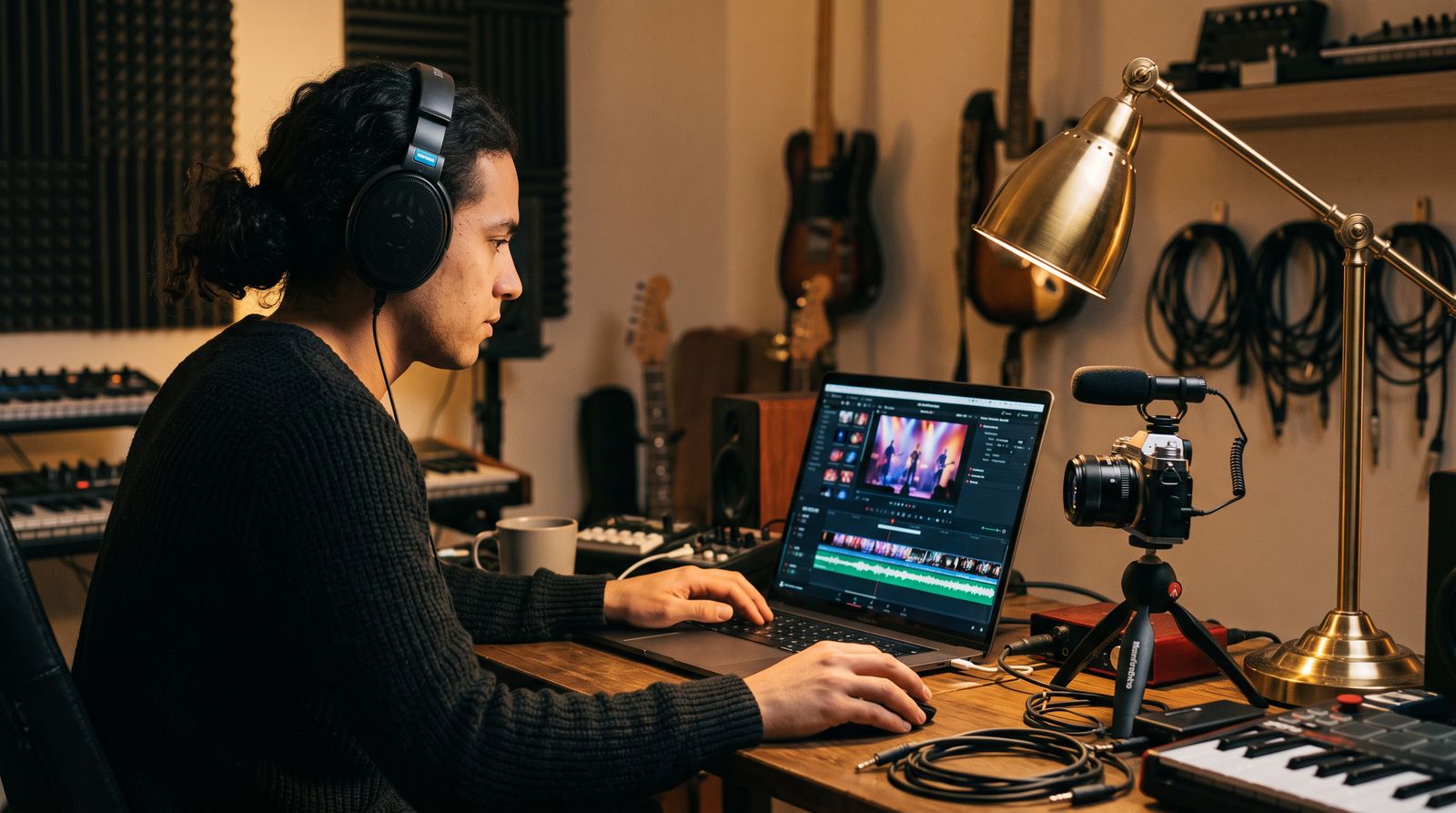
Your demo reel is often the first time a booker sees you perform. It's your audition, your sales pitch and your first impression all at once. And bookers watch a lot of them, often quickly and often on a phone between meetings.
That means your reel doesn't need to be long or fancy. It needs to show, quickly and clearly, that you'll be great in their room. Here's how to build one that does.
Decide who the reel is for
One reel rarely fits every buyer. A corporate planner, a college activities board, a comedy club booker and a cruise line entertainment director are each looking for different signals:
- Corporate: polish, clean material, a well-dressed audience having a great time.
- Colleges: energy, relatability, a young crowd laughing or participating.
- Clubs: strong material, rhythm and a real club atmosphere.
- Speakers: a clear message, credibility, and an engaged room.
If you work in more than one market, make more than one reel. It's worth the effort.
Keep it short
A good rule of thumb is two to four minutes for a highlight reel. Bookers can always ask for more. Many performers also keep:
- A 30 to 60-second teaser for social media and first-contact emails.
- A longer unedited set (10 to 20 minutes) for buyers who want to see how you hold a room over time.
Lead with your strongest moment
Don't start with a logo animation, a slow walk to the stage or a long intro. Open with a moment that shows exactly what you do: a big laugh, an astonished reaction, a crowd singing along, a line from your keynote that lands.
If a booker stops watching after 15 seconds, those 15 seconds should still make the case for you.
Show the audience, not just you
Bookers aren't only buying your performance; they're buying their audience's reaction. Include cutaways to the crowd laughing, applauding or leaning in. Wide shots that show a full room are especially persuasive for corporate and college buyers.
Sound matters more than picture
Viewers will forgive slightly soft video. They won't forgive audio they can't hear. A few tips:
- Record audio from the soundboard or with a dedicated recorder, not just the camera's built-in mic.
- Capture audience sound too, so the laughs and applause are audible.
- Check levels before you edit. Your voice should be clear, and the room should sound full.
Shoot with intent
Plan to capture a strong show rather than hoping to grab footage:
- Pick the right gig: a full, responsive audience in a good-looking room.
- Get permission from the client and venue to record, and confirm how you're allowed to use the footage.
- Use two cameras if possible: one on you, one on the audience.
- Light the stage well. Ask the venue to keep light on you and a little on the crowd.
- Record the whole set, then choose the best moments later.
Edit for clarity, not flash
- Keep cuts clean. Simple transitions work best.
- Let jokes and moments breathe. Include the setup, not just the punchline, so a booker understands the bit.
- Add a simple title card at the end with your name, act type, website and contact details.
- Add captions for key moments. Many people watch with the sound off.
- Keep it current. Refresh your reel when your act changes or your footage starts to look dated.
Make it easy to watch and share
Host your reel on a reliable video platform and share a single link. Don't send large video attachments, don't hide it behind a download, and make sure it plays well on a phone. If you have several reels, give each a clear title: "Corporate highlight — 3 min," "College set — 15 min," "Keynote excerpt — 4 min."
Put everything on one page
A reel works best alongside a short bio, a couple of good photos and your contact details, all in one place. That's the idea behind act pages in GigTools: each act gets a public page with a bio, headshots and multiple titled demo reels, so you can send bookers a single link and let them pick the clip that fits their event.
Short, strong, audience-focused and easy to watch. That's a reel that gets you hired, especially when you send it in a booking email that gets a reply.
More for working performers
 Money
How to Set Your Performance Fee (and Know When to Raise It)
A practical way to price your act, quote with confidence and move your rate up without losing the clients you already have.
 Contracts
What Every Performance Agreement Should Include
The clauses that protect your fee, your time and your sanity, explained in plain English for performers and speakers.
 Gig Prep
The Advance Call: 12 Things to Confirm Before Every Gig
A ten-minute call a week or two out prevents most show-day disasters. Here's exactly what to cover, and a script to make it easy.